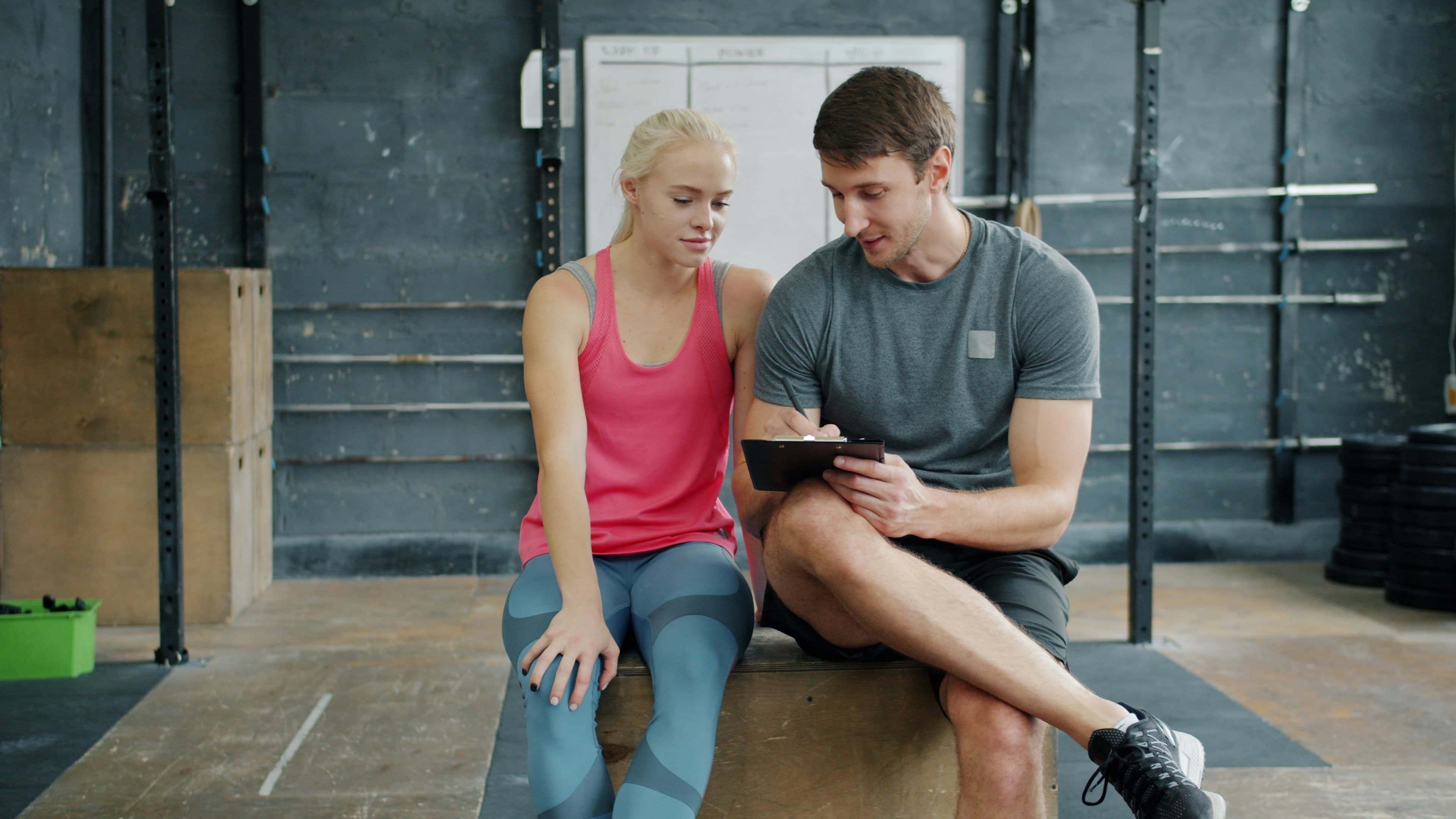
Introduction
You're showing up. You're putting in the work. But a few months in, you look at yourself in the mirror and wonder — am I actually getting anywhere?
This is one of the most common frustrations beginners face. Not because they're not working hard enough, but because they have no way of knowing whether they're working smarter than last time. Every session starts from scratch. You load up the bar, guess at the weight, do some sets, go home. Repeat.
Here's the problem: without a record, you can't improve deliberately. You're leaving your progress to memory and guesswork — and both are terrible training partners.
Research backs this up. A study by Dr. Gail Matthews at Dominican University found that people who write down their goals are 42% more likely to achieve them than those who keep them in their head. When participants also tracked their progress and reported it weekly, the achievement rate jumped to 76% — compared to just 35% for those who didn't track at all.
That gap doesn't happen by accident. It happens because tracking turns vague effort into measurable data.
This guide will show you exactly how to track your workouts properly — starting today, with a system simple enough to maintain and useful enough to actually move the needle.
Your Log Is a Diagnostic Tool, Not a Report Card
Before we get into the what and how, let's reframe what tracking actually is — because most people think about it the wrong way.
Your workout log is not a record of how hard you worked. It's not a gold star chart. It's not proof that you showed up.
It's a diagnostic tool.
Its job is to generate questions and guide decisions. When your log shows you've been lifting the same weight for four weeks, that's a question: why? When it shows you always perform best on Tuesdays, that's a pattern worth using. When it shows your squat went up 20% in 6 weeks while your bench stalled, that's information about where to focus.
The moment you shift from "I need to log so I have a record" to "I need to log so I can make better decisions," tracking goes from a chore to a tool.
Why Tracking Your Workouts Matters
Progressive Overload Requires Memory
The single most important principle in strength and fitness training is progressive overload — gradually increasing the demands you place on your body over time. Your muscles adapt to stress. Once they've adapted, you need more stress to keep growing.
Research published in Frontiers in Physiology confirmed that "progression in volume load is necessary to elicit chronic adaptation" in strength and muscle mass. In plain terms: you have to do more over time, or you plateau.
But here's the catch. You can't do more than last time if you don't know what last time looked like.
Without a log, you're guessing. With one, you have a target.
You Can't Spot a Plateau You Can't See
Plateaus are sneaky. They don't announce themselves. You might spend six weeks lifting the same weight, thinking you're just having an off day each session, when really you've been stuck the entire time.
A log makes this visible. Three sessions in a row at the same weight and reps is a data point. It tells you something needs to change — before you waste another month.
Accountability That Doesn't Depend on Motivation
Motivation fluctuates. Some days you're fired up. Most days you're tired. A written log gives you a different kind of fuel: evidence of what you've already built.
When you open your log and see that two months ago you could only deadlift 60kg and now you're pulling 90kg, that's not motivation — it's momentum. And it's harder to quit on something you can see working.
Goal Clarity
You can't manage what you don't measure. Saying "I want to get stronger" is a wish. Saying "I want to squat 100kg for 5 reps by the end of the year" is a goal — and your log is how you know if you're on track.
What to Track: Start With the Essentials
One of the biggest mistakes beginners make is trying to track everything at once. They set up a complex spreadsheet, download three apps, and within two weeks they've abandoned all of it because it takes 20 minutes per session to log.
Start with the minimum viable log. Here's how to build up over time:
Month 1 — The Core Four (Always Log These)
- Exercise name — be specific. "Bench press" is fine. "Chest machine thing" is not.
- Sets and reps — log each set separately as you complete it. Don't wait until you're done.
- Weight used — in kg or lbs, just be consistent.
- Date of workout — this seems obvious but gets missed constantly.
That's it. Four fields. If you log nothing else in your first month, you're ahead of most beginners.
Month 2 — Add Context
Once logging the core four feels automatic, add:
- RPE (Rate of Perceived Exertion) — a 1–10 scale of how hard the set felt (more on this below)
- How you felt overall — one line. "Felt strong," "exhausted, bad night's sleep," "left knee sore." This context is invaluable when you're reviewing data weeks later.
- Personal records (PRs) — mark them. You'll want to know.
- Notes on pain, fatigue, or anything unusual — these protect you from repeating mistakes.
Month 3 and Beyond — Optional Layers
When the habit is solid and you want a fuller picture:
- Body measurements (waist, hips, chest, arms) — every 4 weeks
- Progress photos — same time of day, same lighting, same angles
- Sleep quality and hydration — especially useful if your performance varies a lot
- Weekly training volume — total sets per muscle group per week
What NOT to Track
Some data looks useful but actively makes people quit logging because it's either inaccurate or meaningless without context:
- Calories burned from gym equipment — treadmill and machine calorie counters are notoriously inaccurate. Don't log these and don't use them to justify eating more.
- Daily bodyweight without a trend line — your weight can fluctuate 2–3kg in a single day based on water, food, and hormones. A single data point means nothing. If you track bodyweight, you need at least 2 weeks of daily data to see a real trend.
- Every warmup set — log your working sets only. Logging warmups clutters your data and adds friction to the habit.
RPE: What It Is and How to Calibrate It
RPE stands for Rate of Perceived Exertion. It's a 1–10 scale that measures how hard a set felt — specifically, how many more reps you could have done if you'd pushed to absolute failure.
| RPE | What It Means |
|---|---|
| 10 | Could not do one more rep. Complete failure. |
| 9 | Could have done 1 more rep with everything you had |
| 8 | Could have done 2 more reps — challenging but solid |
| 7 | Could have done 3 more reps — moderate effort |
| 6 | Could have done 4+ more — relatively easy |
For most working sets, you want to be training at RPE 7–9. Below 6 and you're not challenging yourself enough to adapt. At 10 every set and you'll be unable to recover properly.
How to calibrate your RPE in your first session:
Most beginners overestimate how hard they're working. Here's a simple drill to calibrate:
- Pick a light exercise — dumbbell curls work well.
- Do a set of 10 reps at a weight that feels moderate.
- Immediately estimate: how many more reps could you have done? Be honest.
- Do as many more reps as you think you had left, then count.
- Compare your estimate to reality.
Most beginners find they had 4–5 reps left when they thought they had 2. Do this exercise for the first 3–4 sessions and your RPE ratings will become far more reliable.
How to Choose Your Tracking Method
The best tracking method is the one you'll actually use. Here's an honest breakdown:
Option 1 — Pen and Paper / Notebook
Pros: Simple. Cheap. No battery. No notifications. Impossible to accidentally open Instagram instead of your log. Works in any gym environment.
Cons: Hard to review trends over time. Handwriting gets messy when you're tired. No automatic storage of previous session's data.
Best for: People who find apps distracting or who prefer keeping things analog.
Tip: A small A6 notebook fits in any gym bag pocket. Keep a pen clipped to it.
Option 2 — Fitness App
Pros: Shows you exactly what you did last session before you start. Tracks rest timers. Builds charts automatically. Stores years of data in your pocket.
Cons: Can be a distraction. Relies on your phone being charged and accessible. Some apps are over-engineered for beginners.
Popular options for beginners:
- Hevy — clean interface, shows previous session side-by-side, free tier is generous
- Strong (iPhone) — widely used, simple, good for basic strength tracking
- FitNotes (Android) — free, lightweight, no bloat
- Jefit — more features, good if you want a larger exercise library
Best for: Beginners who want the least friction possible and like seeing their data visualised.
Option 3 — Spreadsheet (Google Sheets / Excel)
Pros: Fully customisable. Great for people who want to build their own system. Can create custom charts and calculations.
Cons: Requires setup time. Accessing it mid-set on a phone is awkward. Easy to over-engineer and abandon.
Best for: People who are comfortable with spreadsheets and want total control over what they track and how it's displayed.
The bottom line: Don't spend a week choosing the perfect method. Pick one today and stick with it for at least 6 weeks before switching.
Step-by-Step: How to Log a Workout
Here's the exact process — before, during, and after every session.
Before the Session
- Open your log (app, notebook, or spreadsheet)
- Write the date
- List the exercises you plan to do in order
- Check what you did last session for each exercise — this is your target today
During the Session
- Log each set immediately after completing it — not at the end of the exercise, not at the end of the session
- Memory degrades fast. After three exercises and fifteen minutes, you will not accurately remember your second set of squats
- If your program says "3x8-12", log each set separately: Set 1: 8 reps @ 60kg, Set 2: 9 reps @ 60kg, Set 3: 7 reps @ 60kg (failed). That's useful data. "3x8-12 @ 60kg" tells you almost nothing.
After the Session
- Add a one-line note on how the session went overall
- Note anything unusual: pain, fatigue, poor sleep the night before, stress, substituted exercises
- Mark any PRs
The Weekly Review (5 Minutes, Once a Week)
This is the step most people skip — and it's the one that makes everything else worth doing. Ask yourself five questions:
- Did I add weight or reps to anything this week?
- Was any session unusually hard or unusually easy?
- Is there a pattern in which days I perform best?
- Am I recovering between sessions, or accumulating fatigue?
- What's one specific thing to focus on next week?
You don't need to spend an hour on this. Five minutes of honest review once a week is more valuable than a month of logging without looking back.
What a Good Log Entry Looks Like
This is what the top-ranking articles never show you. Here's an actual example of a useful log entry vs. a useless one.
Useless Log Entry
Thursday — Chest day
Bench — 3 sets
Cable flies — 3 sets
Tricep pushdowns — done
Felt okay
This tells you almost nothing. You can't use any of this to inform next week's session.
Useful Log Entry
Thursday 20 March — Upper Body (Push)
Sleep last night: 6.5 hrs — felt a bit flat warming up

Bench Press (Barbell)
  Set 1: 8 reps @ 70kg — RPE 6
  Set 2: 8 reps @ 70kg — RPE 7
  Set 3: 6 reps @ 70kg — RPE 9 (failed rep 7, reracked safely) ← PR attempt, not today

Cable Chest Fly
  Set 1: 12 reps @ 15kg — RPE 6
  Set 2: 12 reps @ 17.5kg — RPE 8
  Set 3: 10 reps @ 17.5kg — RPE 8
  [Note: swapped from pec deck — machine was taken, cable felt similar]

Tricep Pushdown (rope)
  Set 1: 15 reps @ 20kg — RPE 7
  Set 2: 13 reps @ 20kg — RPE 8
  Set 3: 12 reps @ 20kg — RPE 8

Overall: Solid session given the sleep. Bench stalled — check next week.
         Triceps improving. Cable fly substitution worked fine — use again if needed.
This entry tells you exactly what you did, how hard it was, why a set failed, how a substitution went, and what to check next week. That's a log you can actually use.
What to Do With Your Data: The 2-for-2 Rule
Tracking is worthless if you never act on it. Here's the most practical rule for knowing when to progress:
The 2-for-2 Rule: If you complete 2 or more extra reps on your last set for 2 consecutive sessions, increase the weight next session.
Here's how that looks in a real log:
| Session | Set 3 (Last Set) | Decision |
|---|---|---|
| Week 1 | 8 reps @ 60kg (target was 6–8) | — |
| Week 2 | 9 reps @ 60kg (+1 above target) | Not yet — only one session over |
| Week 3 | 10 reps @ 60kg (+2 above target, second time) | Add weight next session |
| Week 4 | 6 reps @ 62.5kg (harder, back in range) | — |
Without the log, you'd never catch Week 2 and Week 3 clearly enough to make that call with confidence. With it, the decision makes itself.
A 2022 randomised controlled trial published in PMC confirmed that both increasing load and increasing reps produce similar muscle and strength gains in beginners — so it genuinely doesn't matter whether you add weight or reps first. What matters is that you're progressing, and that you can only know whether you're progressing if you have a record.
What to Do When Progress Stalls
Every beginner article tells you that tracking helps you "spot plateaus." None of them tell you what to actually do when you've spotted one.
A stall is defined as: the same weight and reps for 3 or more consecutive sessions on the same exercise.
When that happens, don't immediately add weight or change the program. Instead, work through this checklist in order:
1. Sleep — are you averaging less than 7 hours? Sleep is when your muscles recover and grow. Below 7 hours consistently and your strength gains will stall regardless of how well you train. If this is the issue, fix sleep before changing anything else.
2. Calories — are you eating enough to support your training? Muscles don't grow in a severe calorie deficit. If you're also trying to lose weight aggressively, you may need to accept slower strength progress or adjust your calorie target.
3. Rest periods — are you cutting them short? Rushing between sets is one of the most common reasons beginners stall. For compound lifts (squat, bench, deadlift, row), you need 2–3 minutes between sets to perform your best. If you're resting 60 seconds and wondering why you can't add weight, try doubling your rest time first.
4. Program age — have you been on the same program for 12+ weeks? Beginner programs work because they're designed to progress quickly. After 3 months, most beginner programs are no longer optimal. Your log will tell you this: if you've been running the same program and progress has been tapering for 4–6 weeks across multiple lifts, it may be time for a new program rather than a tweak.
5. Stress — are major life stressors affecting your recovery? Your nervous system doesn't distinguish between gym stress and life stress. A week of poor sleep due to a work deadline will affect your lifts. If external stressors are high, reduce training intensity temporarily rather than trying to push through.
Work through the checklist. Most stalls have a clear cause once you look for it.
Tracking for Different Training Styles
Most tracking articles assume you only lift weights. But plenty of beginners are doing cardio, classes, yoga, or a mix of everything.
Here's what to track depending on your primary training style:
| Training Style | Primary Metric | Secondary Metrics | Skip |
|---|---|---|---|
| Strength / Lifting | Sets, reps, weight | RPE, rest time, weekly volume | Calorie burn |
| Running / Cardio | Distance, time, pace | Heart rate, perceived effort | Machine calorie counters |
| HIIT / Classes | Rounds completed, modifications | RPE, heart rate | Individual set data |
| Yoga / Mobility | Session duration, notes on progress | Poses achieved, flexibility notes | Weight/load metrics |
If you're doing a mix of training styles, use one log with workout type tags rather than separate apps for each. A single log gives you the full picture of your training week — and lets you spot patterns like "my strength sessions suffer when I also do HIIT on the day before."
How to Restart After a Break
You took two weeks off. Maybe three. Maybe it's been two months. Now you're staring at your old log and wondering whether to pick up where you left off.
Don't.
Your body deconditioned during the break. Going straight back to your previous weights is a fast track to injury and a demoralising first session back.
The re-entry protocol:
- Reduce your logged weights by 20% for your first session back. If you were squatting 80kg, start at 64kg.
- Rebuild for 2 weeks before attempting to match your previous numbers. Most people find they get back to their old baseline within 2–3 weeks — faster than it took to build in the first place.
- Restart the tracking habit in 3 sessions. Don't try to rebuild the perfect log immediately. Session 1: just log the core four. Session 2: add RPE. Session 3: add your notes. By session 3 you'll be back in the habit.
And your log? Don't delete or start a new file. Add a note at the gap: "Break: [dates]. Re-entry from 20% below previous." That context will matter when you review the data later.
Common Beginner Mistakes to Avoid
Tracking too many metrics at once
Starting with 12 fields to log per session is how people quit logging in week two. Start with four. Add more when the habit is automatic.
Logging from memory after the session
Your memory of what you lifted will drift within 20 minutes. Log each set immediately. If this feels disruptive, it gets faster — within a few sessions it takes under 10 seconds per set.
Collecting data but never reviewing it
A log you never look back at is just a diary. The value is in the review. Even a 5-minute weekly check-in transforms raw data into useful decisions.
Switching methods constantly
Switched from notebook to app to spreadsheet and back in your first month? That's the method, not you. Each switch resets your data and your habit. Pick one method and commit to it for at least 6 weeks.
Skipping the "how you felt" note
Numbers without context are misleading. A bad lift session logged as just "80kg x 5" looks like a plateau. The same session with "80kg x 5 — terrible sleep, skipped warmup, stressed" is explained data. Context is what turns a log into a diagnostic tool.
How to Make Tracking a Habit
Research published in PubMed found that fewer than half of people are still consistently tracking after Week 10. The drop-off isn't because people stop training — it's because the tracking habit breaks before it's fully automatic.
Here's how to make it stick:
Attach it to an existing ritual. The most reliable way to build any habit is to stack it onto something you already do automatically. Before you unrack the bar for your first working set — every single time — you open your log. Before the first rep, not after.
Keep your log accessible. An app buried in a folder, a notebook at the bottom of your bag — these create friction. Your log should be one tap or one reach away at all times during your session.
Start smaller than feels necessary. If full logging feels like too much, start with logging only your main compound lift. One exercise, four fields. Do that for two weeks before adding more. A partial log is infinitely more useful than no log.
Treat missed logs like missed reps. One missed session doesn't end a training block. One missed log entry doesn't end a habit. Note the gap, move on, don't quit.
When Tracking Becomes Harmful
This is the section no other beginner tracking guide includes — but it matters.
Tracking is a tool. Like any tool, it can be misused. For some people, the log stops being useful and starts generating anxiety. Here are the five warning signs:
- You avoid the gym if you can't log properly — e.g., you skip a session because your phone is dead or your notebook is at home.
- A "bad" log entry affects your mood for hours — missing reps or going down in weight feels like failure rather than data.
- You feel guilty logging an incomplete session — a 30-minute workout logged as incomplete feels worse than not going at all.
- You optimise workouts for better numbers, not better training — choosing exercises based on what will look good in the log rather than what will make you stronger.
- You've quit and restarted logging 3 or more times in 3 months — each restart more elaborate than the last.
If you recognise two or more of these, the fix is simple: scale back for two weeks. Log only one lift per session — your main compound movement. Just the core four fields. No notes, no RPE, nothing else. Let the habit become low-stakes again before rebuilding.
Frequently Asked Questions
My weights went up but my scale weight didn't change. Am I making progress?
Yes — almost certainly. Increasing strength is measurable progress by definition. Scale weight doesn't capture muscle gain, especially early on when body recomposition (gaining muscle while losing fat simultaneously) is common for beginners. Use your log to track strength trends, and use measurements and photos — not just the scale — to track body composition.
My program says "3x8-12." What exactly do I write down?
Log each set separately. Write the reps you actually completed and the weight used. For example: Set 1: 10 reps @ 50kg. Set 2: 9 reps @ 50kg. Set 3: 8 reps @ 50kg. If you hit the top of the rep range (12) for all three sets, that's your signal to increase weight next session.
The equipment at my gym changed. My numbers look worse — is that real?
Possibly, yes. Equipment varies. A new barbell, different cable stack, or even a different bench angle can genuinely affect performance. When you substitute equipment or exercises, note it in your log alongside a comparison: "New barbell — feels heavier, sticking with same weight for 2 sessions." This protects you from misreading a data point as a plateau when it's actually an equipment change.
I finished my 12-week program. What do I do with my log data now?
Review the last 8 weeks of data before choosing your next program. Identify: your slowest-progressing lift (prioritise it in the next program), your best recovery pattern (how many days between sessions felt optimal), and your average session length (use this to gauge program commitment). Your log is the single best input for building or choosing what comes next.
I train in multiple ways — lifting, running, yoga. One app or three?
One. Use workout type tags or categories within a single log. A unified log lets you see your full training week at a glance and spot cross-training patterns (e.g., heavy leg day the day before a long run consistently hurts your pace). Separate apps create separate silos that are harder to review together.
Conclusion
Tracking your workouts doesn't have to be complicated. It starts with four fields — date, exercise, sets and reps, weight — logged in real time, reviewed once a week.
The research is clear that people who monitor their progress achieve more. The difference between 35% and 76% goal achievement comes down to whether you wrote it down and checked in on it.
But more than the statistics, the reason tracking works is simple: your log remembers what you forget. It shows you patterns you'd never notice session to session. It tells you when to push, when to back off, and when something needs to change.
Start today. Open an app, grab a notebook, or open a spreadsheet. Log one session. Just the core four. Do it again next time, and the time after that.
In four weeks, you'll have data. In eight weeks, you'll see trends. In twelve weeks, you'll have a picture of your progress that no amount of motivation-checking can give you.
That's when the log stops feeling like a chore and starts feeling like your most useful training tool.
Related reading: Free Home Workout Plan Without Equipment | Calisthenics for Beginners | How to Restart Working Out After a Long Break
Sources:
- Matthews, G. (2015). The Impact of Commitment, Accountability, and Written Goals on Goal Achievement. Dominican University of California.
- Strain, T. et al. (2022). Effectiveness of wearable activity trackers to increase physical activity and improve health. eClinicalMedicine / The Lancet.
- Colquhoun, R.J. et al. (2022). Progressive overload without progressing load. PMC9528903.
- Ogborn, D. & Schoenfeld, B.J. (2014). The role of fiber types in muscle hypertrophy. Frontiers in Physiology / PMC4215195.
- Helander, E.E. et al. (2019). Defining adherence to mobile dietary self-monitoring. PubMed PMID: 31155473.
FAQ
Tracking workouts allows you to apply progressive overload, which is essential for building strength and muscle. Without a record, you're guessing each session. A log gives you clear targets and helps you make informed training decisions.
Start with the essentials: exercise name, sets, reps, weight, and date. Once consistent, you can add context like RPE, notes on how you felt, and personal records to improve decision-making.
RPE (Rate of Perceived Exertion) measures how hard a set feels on a scale of 1–10. It helps you understand effort levels, avoid overtraining, and ensure you're working hard enough to progress.
Use the 2-for-2 rule: if you exceed your target reps by 2 or more on your final set for two consecutive sessions, increase the weight in your next workout.
The best method is the one you’ll stick to. Options include a notebook, fitness app, or spreadsheet. Apps are great for convenience, while notebooks reduce distractions—choose based on your preference.
Check key factors first: sleep, nutrition, rest periods, program duration, and stress levels. Most plateaus are caused by recovery or lifestyle issues rather than training itself.
Yes. If tracking causes anxiety, perfectionism, or avoidance of workouts, scale it back. Focus on logging just your main lift for a couple of weeks to rebuild a healthy habit.