Planche Progression for Beginners: The Complete Step-by-Step Guide
The planche is one of the most impressive skills in calisthenics — a horizontal hold that looks like you're floating, supported only by your hands. It's also one of the most misunderstood. Most beginners either jump straight to progressions they're not ready for, or they give up assuming it's only for elite gymnasts.
Neither is true. The planche is learnable. But it requires patience, the right progressions in the right order, and a foundation of strength that most guides skip straight past.
This guide covers everything a beginner needs: what the planche actually demands from your body, the strength prerequisites you need before you start, every progression stage broken down, the most common mistakes that slow people down, and realistic timelines so you know what to expect.
What Is the Planche?
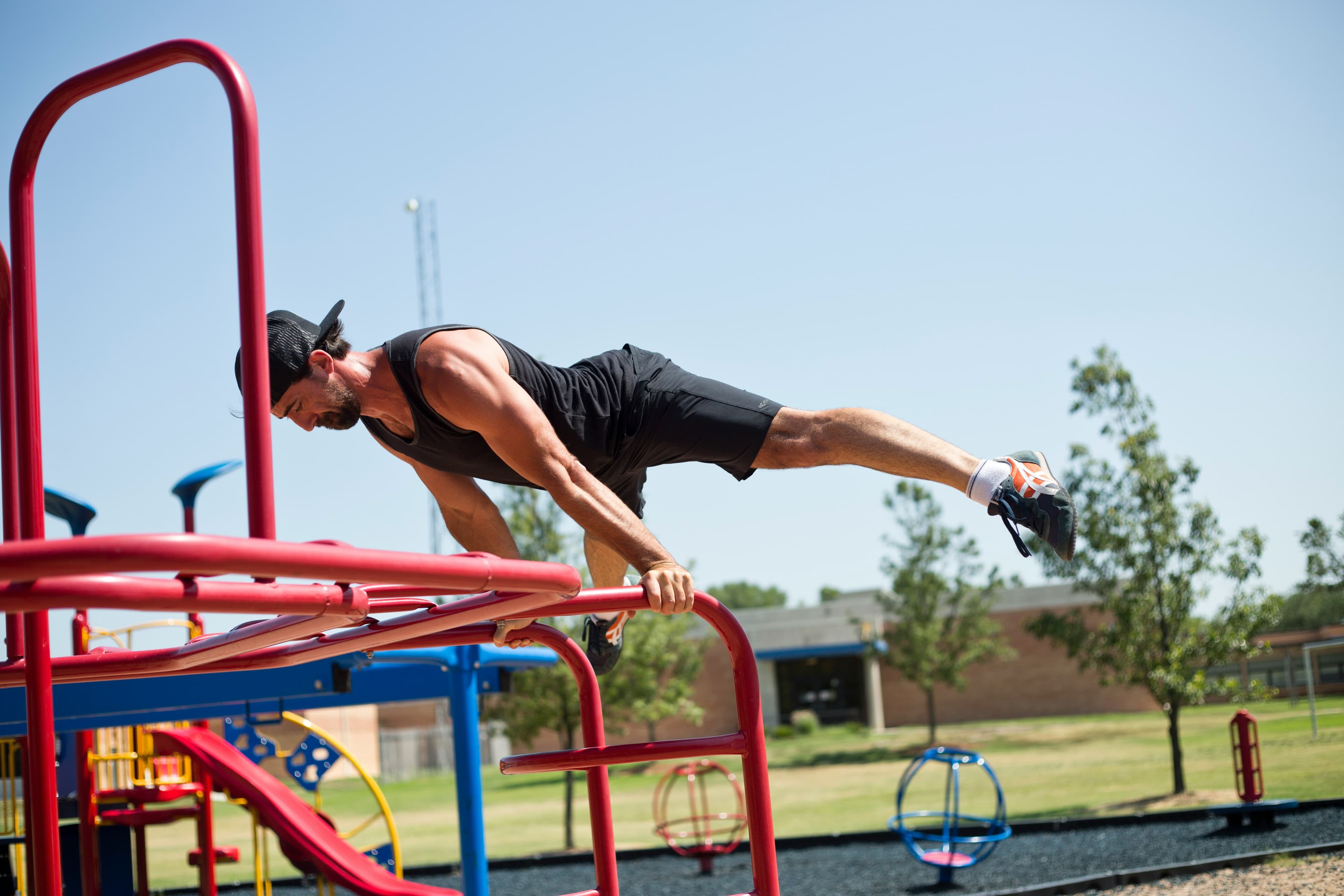
The planche is a static hold where your entire body is held horizontal and parallel to the ground, supported only by your hands. Your arms are straight, your body is rigid, and gravity is working hard against you.
What makes it so difficult isn't just raw strength — it's the specific combination of:
- Anterior deltoid strength to hold your shoulders in front of your wrists
- Scapular protraction (rounding the shoulder blades forward and up)
- Full-body core tension to keep your hips from dropping
- Wrist conditioning to tolerate the extreme extension load
Most upper-body exercises don't train these patterns together. That's why dedicated planche progression work is necessary — you're building movement patterns and structural capacity your body likely doesn't have yet.
Prerequisites: Build This Foundation First
Rushing into planche training without a solid base is the single most reliable way to get injured or stall out in the first few weeks. Before you start any planche-specific work, hit these benchmarks:
Pushing strength
- 20–30 strict push-ups (full range, no sagging hips, no flared elbows)
- 10–15 full dips (complete range of motion, controlled lowering)
These ensure your chest, triceps, and shoulders have the baseline strength to handle planche loading safely.
Core stability
- Hollow body hold for 30–60 seconds
The hollow body position — lower back pressed into the floor, arms and legs extended, ribcage depressed — is the exact core tension pattern the planche requires. If you can't hold it for 30 seconds, your core will be the weak link in every planche progression you attempt.
Wrist conditioning
- Wrist circles, wrist push-ups, and finger extensions performed daily
Planche training puts your wrists into extreme extension under load. This is non-negotiable prep work. Skipping it is the most common reason beginners get sidelined early. Start wrist conditioning work for 2–4 weeks before your first planche session.
The 5 Planche Progressions (In Order)
Work through these stages in sequence. The rule: don't progress until you can hold your current level for 10 seconds with clean form. This isn't arbitrary — it indicates you have enough strength reserve to handle the increased load of the next stage safely.
Stage 1: Planche Lean
What it is: From a push-up position, lean your entire body forward until your shoulders pass your wrists. Keep your arms locked, core tight, and body in a straight line.
What it builds: Wrist tolerance, scapular protraction strength, and the anterior deltoid loading that planche demands. This is the foundational position — everything above it is a variation of this lean.
How to progress: Hold for 10–30 second sets. When 30 seconds feels controlled and your form is solid, move to Stage 2.
Common mistake: Letting the hips pike up to compensate. Keep the body line straight even if it means leaning less far forward.
Stage 2: Tuck Planche
What it is: From the planche lean position, lift your feet off the ground and bring your knees to your chest in a tight tuck. Your hips should be at roughly the same height as your shoulders.
What it builds: True horizontal load through the shoulders and core. This is the first time you're actually off the ground — and where most beginners realise how much strength the planche lean was hiding.
How to progress: Aim for 3–5 sets of 5–10 second holds. Build to 3 sets of 10 seconds before moving on.
Common mistake: Letting the hips drop below shoulder height. If your hips are sagging, you don't have enough strength yet for this stage — go back to longer planche lean holds.
Stage 3: Advanced Tuck Planche
What it is: Same as the tuck planche, but you extend your back into a flat, horizontal position — your thighs are now parallel to the ground rather than tucked to your chest. This dramatically increases the lever arm.
What it builds: The transition between tuck and straddle. The flat back position is a significant strength jump from the standard tuck.
How to progress: 3–5 sets of 5–10 second holds. Build to 3 controlled 10-second holds before progressing.
Common mistake: Rushing from tuck to advanced tuck too quickly. Many people spend weeks on the tuck before the advanced tuck becomes genuinely holdable. That's normal.
Stage 4: Straddle Planche
What it is: From the advanced tuck position, open your legs into a wide straddle. Your body is now fully extended and horizontal — this looks close to the full planche but with legs spread wide to reduce the lever arm.
What it builds: Near-full planche strength. The straddle planche is a legitimate goal in its own right, not just a stepping stone — many advanced athletes train and display the straddle planche as their primary skill.
How to progress: 3–5 sets of 5–10 second holds. Slowly close the straddle width over time as strength increases.
Common mistake: Closing the straddle too quickly. A wide straddle held cleanly is better than a narrow straddle with bent arms or dropping hips.
Stage 5: Full Planche
What it is: The full planche — body horizontal, legs together, arms locked, entire body in a straight line from head to heels. This is the completed skill.
How to reach it: Gradually close your straddle over months of training until the legs come together with no degradation in form or hold duration.
Realistic note: A full planche typically takes 1–3 years from a beginner starting point. Lighter athletes may get there in 6–12 months. Heavier or taller athletes may need closer to 4 years. This is not a 90-day challenge skill — treat it as a long-term practice.
How to Structure Your Training
Frequency
Train planche-specific work 3–4 times per week, with at least one rest day between each session. 20–30 minutes of focused planche work per session is enough — this is high-intensity isometric training, not volume cardio.
Session structure
A basic planche training session looks like this:
- Wrist warm-up — 5 minutes of wrist circles, wrist push-ups, wrist extensions
- Hollow body hold — 3 sets × 30 seconds (maintains the core pattern)
- Current progression holds — 4–5 sets of your current stage, resting 2–3 minutes between sets
- Planche lean negatives — slowly lower from planche lean position to build time under tension
- Supporting work — push-ups, pike push-ups, or dips to build surrounding strength
When to progress
Move to the next stage only when you can hold your current progression for 10 clean seconds across 3 sets. If form breaks (hips drop, elbows bend, back piking), stay at the current stage and keep building.
Common Mistakes That Kill Progress
1. Skipping prerequisites
Jumping into tuck planche attempts without meeting the push-up and dip benchmarks puts underprepared joints and tendons under planche-level load. The result is either a stall at Stage 1 for months, or an injury that sets you back further.
2. Ignoring wrist prep
Planche training puts more stress on the wrists than almost any other bodyweight exercise. Neglecting daily wrist conditioning work is the most common reason beginners get sidelined before building real planche strength.
3. Rushing progressions
The pull to move to the next stage is strong, especially when you hit a 5-second tuck hold for the first time. Resist it. 5 seconds isn't enough to have built the structural integrity needed for the next level. The 10-second benchmark exists for a reason.
4. Training too many exercises
More is not better for planche training. Doing 8–10 different planche variations in a session fragments your volume and prevents the neuromuscular adaptation needed to lock in a specific position. Pick one or two progressions per session and own them.
5. Not breathing
Holding your breath through isometric holds feels instinctive but actively limits performance. Practise breathing slowly and steadily during holds — even in 5-second attempts. This carries over as your holds extend.
6. Training every day without rest
Tendons and connective tissue adapt slower than muscles. Training planche daily without rest days is the fast route to overuse injury — particularly in the wrists, elbows, and anterior deltoids. Respect recovery.
Muscles the Planche Trains
Understanding what's being trained helps you diagnose weak points and program supporting work:
| Muscle | Role |
|---|---|
| Anterior deltoid | Primary driver — holds shoulders in front of wrists |
| Serratus anterior | Scapular protraction — the "floating" component |
| Chest (pectorals) | Pushing stability throughout the hold |
| Triceps | Elbow lock and pushing endurance |
| Core (rectus abdominis, obliques) | Full-body tension — prevents hip drop |
| Wrist flexors/extensors | Joint stability under extreme extension load |
The serratus anterior is worth highlighting — it's a muscle most people have never consciously trained, and it's critical to the planche. Exercises like serratus push-ups (protraction push-ups where you push your shoulder blades apart at the top) are excellent supplementary work.
Realistic Timelines
These aren't guarantees — they're evidence-based ranges based on dedicated training at 3–4x per week:
| Milestone | Typical Timeframe |
|---|---|
| First planche lean (10 sec) | 2–4 weeks |
| First tuck planche (5 sec) | 2–4 months |
| Solid tuck planche (10 sec) | 3–6 months |
| Advanced tuck planche | 6–12 months |
| Straddle planche | 1–2 years |
| Full planche | 1–3 years |
Lighter athletes (under 70kg) trend toward the faster end. Heavier athletes need more time — not because they're training wrong, but because physics is working harder against them.
Frequently Asked Questions
Do I need rings or parallel bars to train the planche? No. The floor planche is the standard starting point for beginners and where most people train. Rings and parallel bars become relevant at advanced stages, but you can reach a solid straddle planche with nothing but the floor.
Should I do planche negatives? Yes. Planche negatives (slowly lowering from the planche lean position) are one of the best tools for building planche-specific strength faster. They extend your time under tension in the exact position that matters.
Can I train planche and front lever at the same time? Yes, but be conservative with total volume. Both skills demand a lot from the shoulders and connective tissue. If you're programming both, run them on the same days (not separate days) so rest days are true recovery days for all planche/lever structures.
What if I plateau on the tuck planche for months? A long plateau on the tuck planche almost always comes from one of three things: insufficient push-up and dip base strength, inconsistent training frequency, or inadequate recovery between sessions. Audit all three before concluding the plateau is mysterious.
Where to Start This Week
If you're new to planche training, here's your first week:
- Test your prerequisites — can you hit 20 push-ups, 10 dips, and a 30-second hollow body? If not, run 3–4 weeks building those first.
- Start wrist conditioning immediately — 5 minutes of wrist prep daily, starting now, before your first planche session.
- Session 1: Planche leans only — 5 sets of 20-second planche leans with max forward lean. Get familiar with the position before rushing to tuck.
- Be consistent over 3–4 months — the tuck planche is 3–6 months away with consistent work. That's not far. The athletes who get there are the ones who don't quit in month two when progress feels invisible.
The planche is a long game. Play it right from the start, and it's entirely achievable. To build better shoulder stacking and inverted body awareness in parallel, combine this with our handstand progression guide. If your pulling base is lagging, run the first pull-up progression plan alongside your planche sessions.
FAQ
A planche is a static bodyweight skill where your entire body is held horizontal and parallel to the ground, supported only by your hands. It requires extreme pushing strength, core tension, and scapular protraction working together simultaneously.
Most beginners achieve their first tuck planche hold within 3–6 months of consistent training. A full planche typically takes 1–3 years, though lighter athletes may achieve it in 6–12 months and heavier athletes may need closer to 4 years.
You should be able to perform 20–30 strict push-ups, 10–15 full dips, and hold a hollow body position for 30–60 seconds before starting planche-specific progressions. These benchmarks ensure your joints and tendons are ready for the load.
A planche lean is the entry-level planche drill where you lean your body forward from a push-up position until your shoulders pass your wrists. It builds wrist conditioning, protracted scapula strength, and the core tension needed for every stage above it.
The standard progression order is: planche lean → tuck planche → advanced tuck planche → straddle planche → full planche. Each stage builds directly on the strength and positional awareness of the one before it.
Train planche-specific work 3–4 times per week with at least one rest day between sessions. Each session should focus on 20–30 minutes of planche work. Training every day without recovery is one of the most common reasons beginners plateau or get injured.
The planche primarily works the anterior deltoids, chest, triceps, serratus anterior, and core. The protracted scapula position also places heavy demand on the serratus anterior — a muscle most people have never trained directly.
Wrist pain during planche training almost always means you skipped wrist conditioning work. Before every session, spend 5–10 minutes on wrist circles, wrist push-ups, and finger extensions to build the joint tolerance planche training demands.