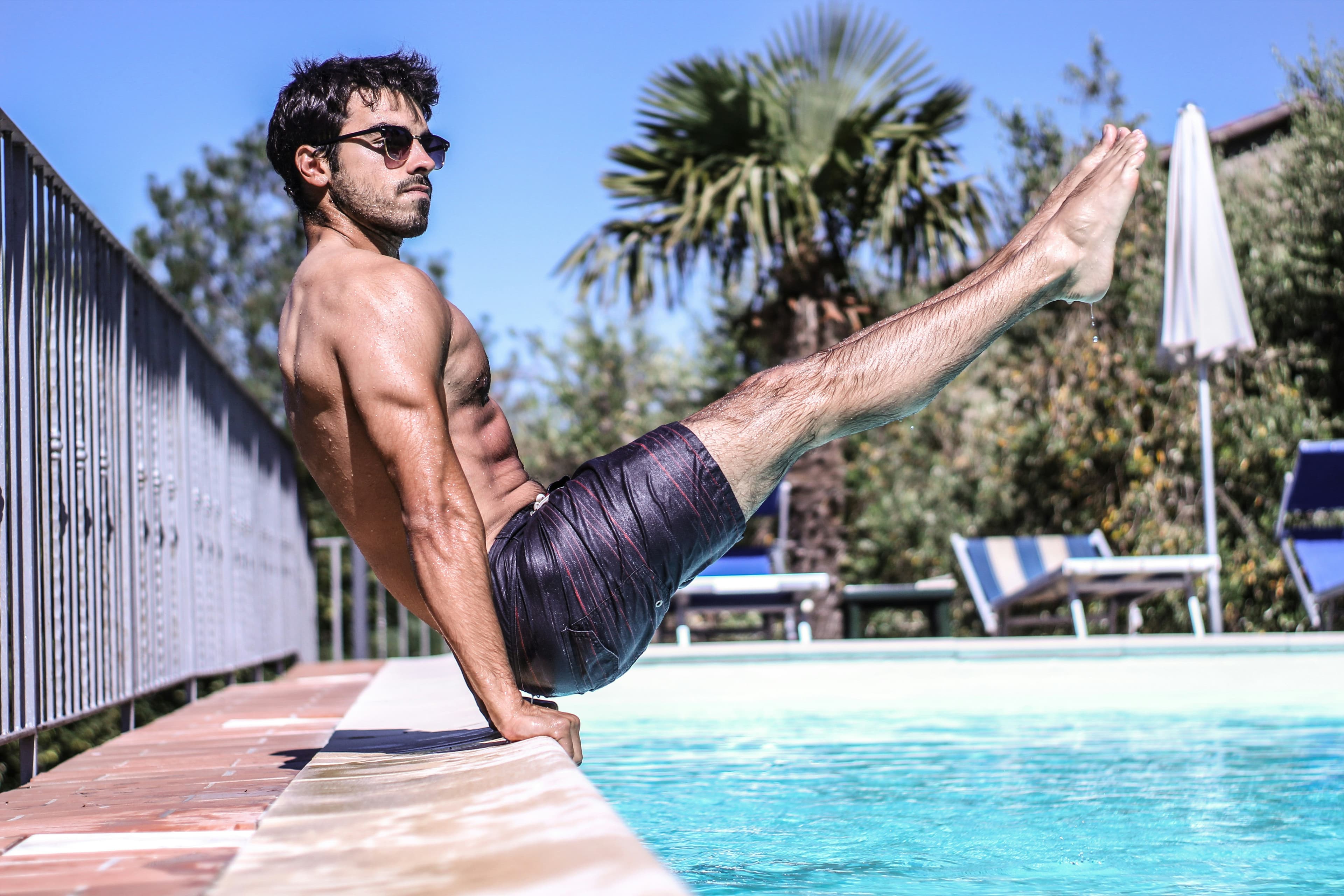
Calisthenics for Beginners: The Complete Guide to Starting Right
Calisthenics is one of the oldest and most effective forms of training in existence — used by ancient Greek athletes, military forces worldwide, and elite gymnasts. Yet despite its long history and a mountain of supporting research, most beginners get it wrong from day one.
This guide cuts through the noise. By the end, you'll know exactly what to do in your first four weeks, how to build on it, and how to avoid the mistakes that keep most beginners stuck for months.
What Is Calisthenics?
The word comes from the Greek kalos (beauty) and sthenos (strength). In practice, it means using your own bodyweight as resistance to build muscle, strength, and coordination — no machines, no barbell, no gym required.
What makes calisthenics different from a random set of bodyweight exercises is progressive overload. Just like adding weight to a barbell, calisthenics progressively challenges your body through harder exercise variations, more volume, or reduced rest — forcing continuous adaptation.
This is why a beginner starts with knee push-ups, and an advanced practitioner eventually works towards a one-arm push-up. Same movement pattern, fundamentally different demands.
Why Calisthenics Works: What the Research Shows
Calisthenics is not just practical — it is scientifically validated.
- A study in the Journal of Human Kinetics (2017) found that progressive push-up training significantly increased upper-body muscle thickness and strength, comparable to bench press training at equivalent loads.
- A 2017 study on a structured calisthenics program found improvements in posture, strength, and body composition after just a few weeks of training.
- Research published in BMC Public Health demonstrated that a daily habit-based bodyweight resistance program produced measurable fitness gains without any gym equipment.
- Harvard Health Publishing describes calisthenics as "an effective, low-frills way to stay fit" — highlighting its accessibility and the broad range of muscles it engages.
- A 2022 study in PMC showed that even 16 minutes of calisthenics per day spread across a sedentary workday produced meaningful improvements in neuromuscular function, balance, and strength.
The takeaway: calisthenics works, and it works quickly when done correctly.
The 6 Foundational Movement Patterns
Every calisthenics program for beginners — no matter how sophisticated — is built on six movement patterns. Master these and you have the base for everything else.
1. Push (Horizontal) — Push-Up
Muscles: Chest, front deltoids, triceps
The push-up is the backbone of upper-body pushing strength in calisthenics. Start with knee push-ups or incline push-ups (hands elevated on a bench) if a full push-up isn't possible yet.
Progression path: Knee push-up → Incline push-up → Full push-up → Close-grip push-up → Archer push-up → One-arm push-up
2. Pull (Horizontal) — Inverted Row / Bodyweight Row
Muscles: Upper back, rear deltoids, biceps
This is the most overlooked movement by beginners. Neglecting pulling exercises creates muscle imbalances and shoulder problems. Use a low bar, a table edge, or gymnastics rings set low.
Progression path: Incline row → Inverted row → Feet-elevated row → Pull-up → Weighted pull-up
3. Squat — Bodyweight Squat
Muscles: Quads, glutes, hamstrings, core
The bodyweight squat is your primary lower-body strength builder. Focus on depth and control before adding any complexity.
Progression path: Assisted squat → Bodyweight squat → Bulgarian split squat → Pistol squat (assisted) → Full pistol squat
4. Hinge — Glute Bridge / Hip Hinge
Muscles: Glutes, hamstrings, lower back
Hip hinging is how you train the posterior chain in calisthenics. Glute bridges are the entry point; progressing to single-leg variations and eventually Nordic curls builds serious hamstring strength.
Progression path: Glute bridge → Single-leg glute bridge → Hip thrust → Single-leg RDL → Nordic curl
5. Core — Plank
Muscles: Entire core (anterior, posterior, lateral)
The plank teaches your core to resist force — the primary function of the abdominals in real life and in sport. Do not rush to sit-ups; a solid plank is far more functional.
Progression path: Knee plank → Full plank → RKC plank → Plank with shoulder taps → Hollow body hold → Dragon flag
6. Lunge — Split Squat
Muscles: Quads, glutes, hip flexors
Single-leg training corrects left-right imbalances and builds unilateral strength that carries over to every athletic movement.
Progression path: Assisted lunge → Reverse lunge → Forward lunge → Bulgarian split squat → Shrimp squat
What You Actually Need to Start
One of the biggest advantages of calisthenics is the low barrier to entry.
To start today (zero cost):
- A floor
- Your own bodyweight
Worth adding early on:
- Pull-up bar (~£20–30): Unlocks all pulling movements. A doorframe bar is fine to begin with.
- Resistance bands: Allow you to do assisted pull-ups and rows before you're strong enough for full versions.
That is genuinely all you need for the first 6–12 months of training.
Your 4-Week Beginner Calisthenics Plan
Train 3 days per week with at least one rest day between sessions. A Monday / Wednesday / Friday split works well, but any three non-consecutive days are fine.
Each session follows this structure:
- Warm-up (5–8 minutes): joint circles, leg swings, arm circles, light cardio
- Main workout (25–35 minutes): the exercises below
- Cool-down (5 minutes): light stretching of worked muscles
Week 1–2: Building the Foundation
Focus on form, not numbers. Every rep should be controlled.
| Exercise | Sets | Reps / Hold |
|---|---|---|
| Incline or Knee Push-Up | 3 | 8–10 |
| Inverted Row (low bar or table) | 3 | 8–10 |
| Bodyweight Squat | 3 | 10–12 |
| Glute Bridge | 3 | 10–12 |
| Plank | 3 | 20–30 sec |
| Reverse Lunge | 2 | 8 each leg |
Rest: 60–90 seconds between sets.
Week 3–4: Building Volume
Same movements, more demand. If full push-ups feel strong, switch to them. Add one set to each exercise.
| Exercise | Sets | Reps / Hold |
|---|---|---|
| Push-Up (full or incline) | 4 | 8–12 |
| Inverted Row | 4 | 8–12 |
| Bodyweight Squat | 4 | 12–15 |
| Single-Leg Glute Bridge | 3 | 10 each leg |
| Plank | 3 | 30–45 sec |
| Reverse Lunge | 3 | 10 each leg |
Rest: 60 seconds between sets.
How to Progress After Week 4
Once you can complete all sets and reps with clean form, it's time to progress. Use this order of operations:
- Increase reps — If the target is 10, work up to 15 before progressing.
- Move to the next variation — E.g. full push-up after mastering incline push-up.
- Reduce rest — Less recovery between sets increases the challenge without changing the exercise.
- Add sets — Going from 3 to 4 sets adds ~25% more volume.
Never progress more than one variable at a time. If you move to a harder variation, keep reps and rest the same until you've adapted.
The Most Common Beginner Mistakes
1. Skipping pulling movements
Push-ups are visible and satisfying. Rows are awkward to set up. Most beginners end up doing 4× as much pushing as pulling, which causes rounded shoulders and shoulder impingement over time. Pull at least as much as you push.
2. Rushing to advanced exercises
Seeing someone do muscle-ups or handstands online makes it tempting to skip the basics. Don't. A push-up done perfectly is a prerequisite for a muscle-up. There are no shortcuts in calisthenics — only people who look for them and stall.
3. Not tracking workouts
If you don't write down your reps and sets, you have no way of knowing whether you're progressing. A simple note in your phone is enough. See our guide on how to track your workouts properly for the full system.
4. Training every day
Because there's no heavy barbell, it's easy to assume calisthenics doesn't need rest days. It does. Muscle is built during recovery, not during training. Three days on, four days off is the correct starting approach.
5. Expecting too much too soon
Beginners often quit at the 3–4 week mark when visible changes haven't appeared. This is the worst time to stop — it's also the point just before the body begins to visibly adapt. Trust the process for at least 8 full weeks before evaluating results.
When Will You See Results?
Here's an honest timeline based on the research and real-world experience:
| Timeframe | What to Expect |
|---|---|
| Week 1–2 | Improved body awareness, better sleep, some muscle soreness |
| Week 3–4 | Noticeable strength gains, exercises becoming easier |
| Week 6–8 | Visible tightening of muscles, cleaner movement patterns |
| Week 10–12 | Clear physical changes in body composition for most people |
Factors that speed up results: adequate protein intake (1.6–2g per kg of bodyweight), 7–9 hours sleep, consistency (missing fewer than 1 session per 2 weeks).
Calisthenics vs The Gym: Which Is Better for Beginners?
The honest answer: both work. The better question is which one you'll actually stick to.
Calisthenics wins on:
- Accessibility (no gym required, no commute)
- Cost (essentially free)
- Functional strength and body control
- Scalability — you can train anywhere in the world
The gym wins on:
- Easier to apply progressive overload to lower body (adding weight to a squat is simpler than progressing to a pistol squat)
- Better for building maximum muscle mass quickly
For most beginners, calisthenics is the higher-compliance option — and compliance is the single biggest predictor of long-term results.
Nutrition Basics for Calisthenics Beginners
You don't need a complex diet. You need three things:
- Enough protein: Aim for 1.6–2g of protein per kg of bodyweight daily. Prioritise chicken, eggs, fish, Greek yoghurt, and legumes.
- Enough calories: Under-eating while training hard stalls progress. Don't be in a significant calorie deficit while trying to build strength.
- Consistent hydration: Even mild dehydration reduces performance. Drink water consistently throughout the day.
Everything beyond this is optimisation — important eventually, but not where a beginner should focus their attention.
Summary: Where to Start Today
- Bookmark this guide and re-read the foundational exercises section.
- Get a pull-up bar — it's the one piece of kit that pays off immediately.
- Start Week 1 of the plan — don't wait for the perfect moment.
- Track your workouts from session one.
- Commit to 8 weeks before evaluating your progress.
Calisthenics rewards consistency above everything else. The people who build impressive physiques and skills with bodyweight training are not the most talented — they're the ones who showed up three times a week, month after month, and progressed systematically.
Start simple. Stay consistent. Progress deliberately.
Sources:
- Effect of Progressive Calisthenic Push-up Training on Muscle Strength and Thickness — PubMed
- The effects of a calisthenics training intervention on posture, strength and body composition — ResearchGate
- Protocol for Minute Calisthenics: a randomized controlled study — PMC
- The Effect of Breaking Up Sedentary Time with Calisthenics on Neuromuscular Function — PMC
- Calisthenics: An effective, low-frills way to stay fit — Harvard Health
FAQ
Yes — calisthenics is one of the best training styles for beginners. Every exercise has an easier regression you can start with (e.g. knee push-ups before full push-ups), so you can train effectively from day one regardless of your current fitness level.
Three full-body sessions per week is the sweet spot for beginners. Training on alternating days (e.g. Monday, Wednesday, Friday) gives your muscles 48 hours to recover and adapt between sessions, which is when strength gains actually happen.
Most beginners notice strength improvements within 2–4 weeks and visible physical changes within 6–12 weeks with consistent 3x/week training. Research on progressive calisthenics programs confirms significant strength gains within 8 weeks.
No. You can build a solid foundation using nothing but your bodyweight. A pull-up bar is the one piece of kit worth adding early on — it unlocks pulling movements that are hard to replicate otherwise. Resistance bands (for assisted progressions) are a useful optional addition.
Weight training uses external resistance (barbells, dumbbells) to progressively overload muscles. Calisthenics uses your own bodyweight. Both build muscle and strength — the key difference is that calisthenics also develops relative strength, body control, and mobility simultaneously.
The most common reasons are: training too infrequently, skipping pulling exercises, not sleeping enough, progressing too fast before mastering the basics, or not tracking workouts to apply progressive overload. Fix these and progress resumes.
Yes. A 2017 study published in the Journal of Human Kinetics found that progressive calisthenics produced significant improvements in upper-body muscle thickness and strength comparable to gym-based training. The key word is progressive — the exercises must get harder over time.
A three-day full-body routine built around push-ups, bodyweight rows or inverted rows, squats, hip hinges, planks, and lunges covers all major muscle groups. The 4-week plan in this article is a solid starting point.